
If debt is consuming so much of your income that you cannot save, build an emergency fund, improve your monthly cash flow, or make meaningful progress toward your financial goals, bankruptcy may be worth considering. For people who qualify, Chapter 7 can discharge many eligible unsecured debts, while Chapter 13 can reorganize debt through a court-supervised repayment plan lasting three to five years. Filing also generally triggers the automatic stay, which stops most collection actions while the bankruptcy case is pending.
I have spent decades helping people who started the year determined to change their finances, only to discover months later that the balances barely moved. They cut subscriptions. They stopped eating out. They sent every extra dollar to creditors. Yet interest continued to build and there was still no room in the budget for an emergency, retirement, or even a month without relying on a credit card.
At that point, the problem may be bigger than budgeting.
Sometimes the debt itself is preventing you from moving forward.
Why your financial goals may feel impossible even when you are doing everything right
Consider someone who begins the year with $30,000 in credit card debt and makes paying it off the top financial priority.
They reduce discretionary spending. They send thousands of dollars toward the cards over the next six or seven months. Yet when they check the balances, the progress is nowhere near what they expected because a significant portion of each payment went toward interest.
That is when I encourage people to look at the larger picture.
Your financial goals should include building a financial life that works going forward. Spending years putting nearly every available dollar toward old credit card balances may leave no room to prepare for the next emergency.
That can create a cycle:
- A large portion of income goes toward debt payments
- There is little or no money left for savings
- An unexpected expense occurs
- A credit card has to cover that expense
- The balance rises again
- The debt payoff timeline gets even longer
Someone can be disciplined and still get stuck in this cycle.
How bankruptcy can change the financial equation
Bankruptcy can change what your monthly finances look like because it addresses qualifying debt rather than asking you to simply budget around it indefinitely.
Chapter 7 can eliminate many eligible unsecured debts
Chapter 7 does not involve a repayment plan like Chapter 13. Its primary purpose for individual debtors is to discharge qualifying debt and provide a financial fresh start. Most individual Chapter 7 cases result in a discharge, although some debts are excluded and property issues must be evaluated before filing.
Common unsecured debts that may be dischargeable include:
- Credit card balances
- Medical bills
- Personal loans
- Certain older financial obligations that are not secured by property
If those types of debts are taking hundreds or thousands of dollars out of your budget every month, eliminating eligible balances can change what becomes possible financially.
If you want to better understand the distinction between secured and unsecured obligations, I explain it further in my article on understanding unsecured debts in bankruptcy.
Chapter 13 can create a structured repayment path
Chapter 13 works differently. It allows individuals with regular income to develop a court-supervised repayment plan, generally lasting three to five years. Depending on the case, unsecured creditors may receive less than the full amount owed, while the debtor follows a structured payment plan based on the requirements of the Bankruptcy Code.
Chapter 13 can also be useful when someone needs time to address secured debt, such as mortgage or vehicle arrears, while keeping important property.
The right chapter depends on income, assets, the type of debt involved, and what you are trying to accomplish.
Bankruptcy can also stop the constant collection pressure
Financial stress is not limited to the balance on a statement. Collection calls, lawsuits, wage garnishments, and the fear of what a creditor might do next can make it almost impossible to think strategically.
When a bankruptcy petition is filed, the automatic stay generally stops most collection activity. Creditors usually cannot continue lawsuits, wage garnishments, or collection calls while the stay is in effect.
That breathing room can make a world of difference. A financial reset requires more than eliminating debt. You also need enough stability to think about what comes next.
What should your first financial goals after bankruptcy look like?
People sometimes believe the first goal after bankruptcy needs to be buying a house, reaching a perfect credit score, or building a large investment account.
I usually encourage something much more practical.
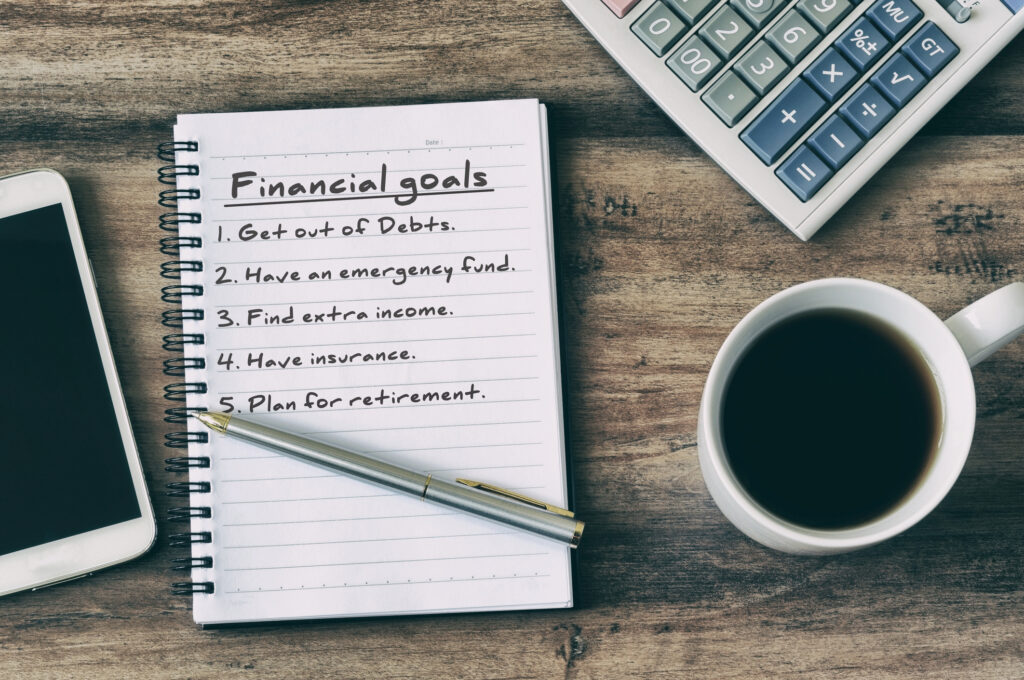
Your first goals may be:
- Get through an entire month without using a credit card for groceries.
- Save the first $500 emergency fund.
- Pay every current bill on time.
- Build that emergency fund from $500 to $1,000.
- Create room for retirement contributions or longer-term savings.
Those accomplishments may seem small compared with buying a home, but they represent something important: stability.
Once the monthly budget stops revolving around yesterday’s debt, your money can begin serving tomorrow’s needs.
A financial fresh start should give you room to build, not just survive
One of the biggest mindset shifts I encourage is changing the definition of success.
If you are sending $800 every month toward credit cards but have no emergency fund, no retirement contributions, and no money left when the car needs repairs, you may technically be paying debt while becoming more financially vulnerable.
A healthier goal is to create a budget with room for both present expenses and future security.
Your financial goals may eventually include:
- Building several months of emergency savings
- Improving your credit profile over time
- Saving for a home
- Contributing to retirement
- Planning for your children’s future
- Replacing an unreliable vehicle without creating another financial crisis
- Having enough cash flow to absorb routine emergencies
Bankruptcy cannot accomplish those things for you automatically. What it can sometimes do is remove or reorganize the debt that has been consuming the money you would otherwise use to pursue them.
What about your credit after bankruptcy?
Credit is a fair concern. Bankruptcy can affect your credit history, and no attorney should pretend otherwise.
The more useful question is what your credit looks like before filing and what you can do after the case.
Many people considering bankruptcy already have late payments, defaults, collection accounts, high utilization, or judgments affecting their credit profile. A bankruptcy discharge does not create a perfect credit report, but it can resolve qualifying debts that may already be causing significant financial strain.
Afterward, rebuilding usually involves ordinary financial habits:
- Paying current obligations on time
- Monitoring credit reports for accuracy
- Avoiding unnecessary new debt
- Maintaining a realistic monthly budget
- Building savings so every unexpected expense does not have to go on credit
The goal is gradual improvement and stronger financial habits.
Three questions to ask during a midyear financial check-in
If the year started with ambitious financial goals and you now feel like you are running in place, ask yourself these three questions.
1. Am I actually making meaningful progress on my debt?
Look at your balances from the beginning of the year and compare them with where you are now.
Do not focus only on how much money you paid. Ask how much the actual principal balance decreased.
If thousands of dollars have gone out and very little debt has disappeared, the current strategy deserves another look.
2. Does my budget leave room for emergencies or future goals?
A budget that technically covers minimum payments but leaves nothing for savings is fragile.
A car repair, medical bill, school expense, or job disruption can immediately push you back onto credit cards.
That is a sign that debt payments may be taking up more of your financial life than you can sustainably afford.
3. If nothing changes, where will I be financially next year?
This may be the most important question.
Take your current payment strategy and project it forward another 12 months.
Will the credit card balances be substantially lower?
Will you have an emergency fund?
Will you be closer to buying a home or saving for retirement?
Or will another year of income largely disappear into interest and old debt?
If you do not like the answer, learning about another option can be worthwhile.
A practical example of when the strategy may need to change
Imagine a New Jersey consumer who owes $30,000 across several credit cards.
They have been paying approximately $900 per month. After rent, groceries, transportation, insurance, and those debt payments, almost nothing is left.
An unexpected $700 car repair goes back onto a credit card because there is no emergency fund.
Months later, the person has paid thousands of dollars but still owes close to the original balance.
At that point, the question is no longer whether they can tighten the budget another $50.
The bigger question is whether continuing the same strategy will ever produce the financial stability they are trying to achieve.
For someone who qualifies, bankruptcy may provide a different path. Chapter 7 could potentially discharge eligible unsecured balances. Chapter 13 could provide a structured repayment approach. The right choice depends on the full financial picture.
When waiting can work against your financial goals
People often tell themselves they should wait until things become worse before exploring bankruptcy.
During that waiting period, interest may continue accumulating, late fees can grow, collection activity may escalate, and money that could potentially have gone toward protected savings or future needs may continue going toward old debt.
I discuss that problem in more detail in why waiting to file bankruptcy could cost you more than you think. The important point is that learning about bankruptcy early gives you information. It does not require you to file.
Questions I hear from people who feel financially stuck
Can bankruptcy help me reach financial goals faster?
It can in the right situation. If eligible debt is consuming most of your disposable income, discharging or reorganizing that debt may create more room in the budget for savings and current expenses. The result depends on the chapter, your debts, income, and assets.
Does Chapter 7 wipe out credit card debt?
Many ordinary credit card debts can be discharged in Chapter 7, although exceptions apply and every case should be reviewed individually. Chapter 7 is designed to discharge qualifying debts and provide individual debtors with a fresh start.
How long does a Chapter 13 repayment plan last?
A Chapter 13 plan generally lasts three to five years, depending largely on income and the circumstances of the case.
Does filing bankruptcy stop collection calls?
The automatic stay generally stops most collection actions once a bankruptcy petition is filed, including many lawsuits, wage garnishments, and collection calls. Some exceptions apply.
Should I wait until I cannot make any payments before talking to a bankruptcy lawyer?
No. You can explore your options before reaching a financial breaking point. An earlier consultation can help you understand whether bankruptcy makes sense and what risks may come with continuing your current strategy.
Your next financial goal may simply be creating room to move forward
If your financial goals have barely moved despite months of sacrifice, take a closer look at what is holding you back. Sometimes another round of budget cuts is enough. In other situations, the debt load itself needs to be addressed before meaningful progress becomes realistic.
Bankruptcy carries consequences and should be considered carefully. For someone who qualifies, it can also provide a legal way to eliminate or reorganize debt and begin building a financial life around current needs and future priorities instead of old balances.
If you are struggling with consumer or business debt in New Jersey, I encourage you to contact my office for a consultation. We can review where you are now, what you are trying to accomplish, and whether bankruptcy or another approach makes sense.
Seeking advice does not commit you to filing. It gives you the information you need to decide what a real financial fresh start could look like for you.